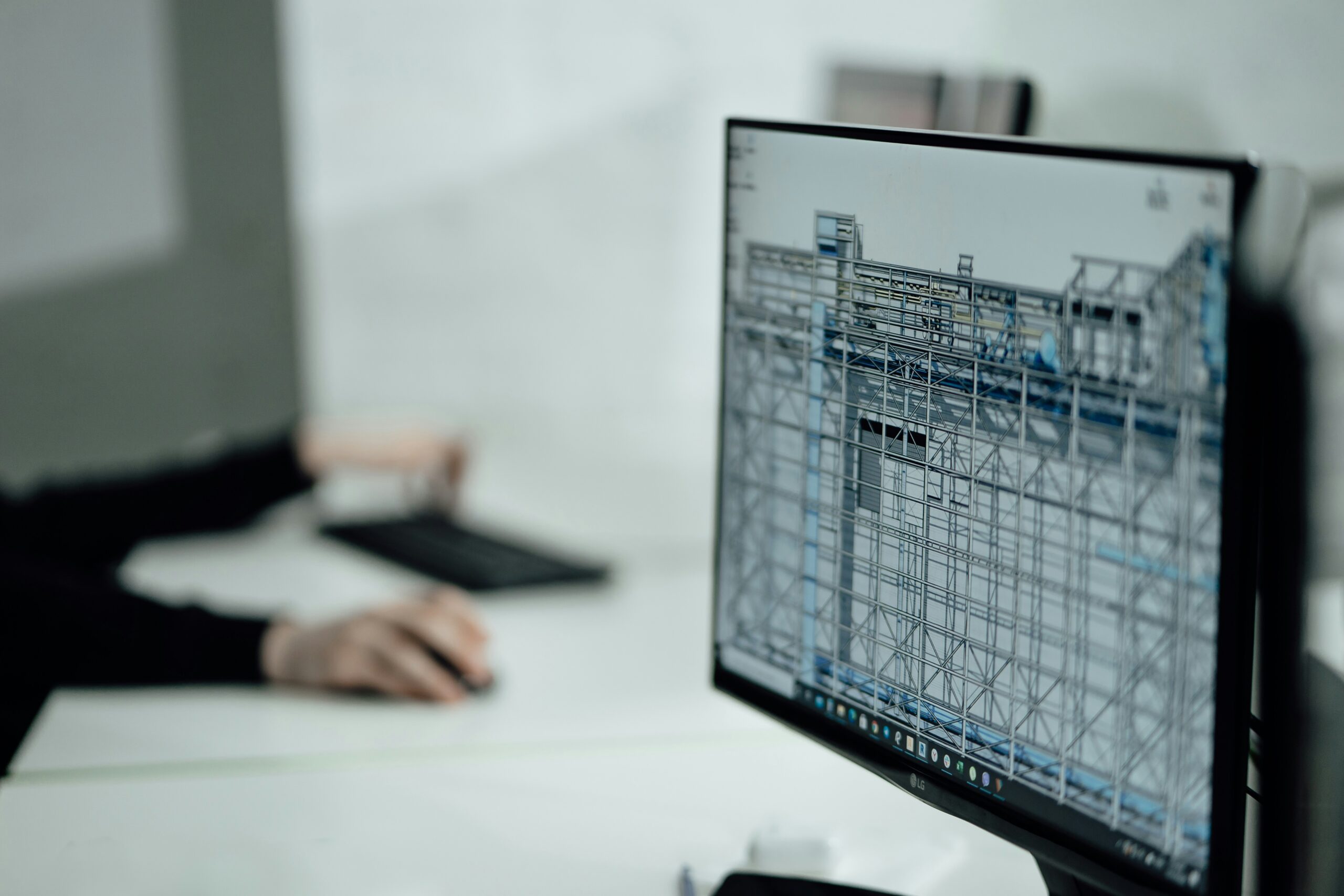
Introduction to Revit and Its Importance
Revit is a highly regarded Building Information Modeling (BIM) software developed by Autodesk, designed to meet the multifaceted needs of the design and construction industry. As an integral tool, Revit facilitates the creation of accurate, detailed, and cohesive digital models that represent the physical and functional characteristics of buildings and infrastructure. The software’s robust capabilities make it a cornerstone for architects, engineers, contractors, and project managers who aim to enhance both productivity and precision in their workflows.
One of Revit’s key strengths lies in its ability to enable complex, multi-disciplinary collaboration across the different phases of a building’s lifecycle—from conceptual design and visualization to construction and eventual maintenance. Utilizing Revit for designing ensures seamless integration of architectural designs with structural and MEP (Mechanical, Electrical, and Plumbing) elements, thereby minimizing errors and reducing the need for costly modifications down the line. This high level of coordination and integration is made possible through Revit’s parametric components and powerful data management features, which allow for real-time changes to be reflected instantly across all views.
In the construction industry, Revit offers substantial advantages by streamlining workflows and enhancing project outcomes. It enables stakeholders to visualize virtual models that help in evaluating design intent, feasibility, and performance before actual construction begins. This predictive approach results in better decision-making and more efficient resource allocation. In addition, Revit’s comprehensive documentation functionalities ensure that all project details, including schedules, quantities, and cost estimates, are maintained with a high degree of accuracy and consistency.
Therefore, understanding and utilizing Revit is paramount in today’s competitive design and construction landscape. The software not only fosters improved communication and collaboration among various project teams but also significantly boosts precision and efficiency, making it an indispensable tool in the modern industry.
Enhanced Collaboration and Communication
The integration of Revit within architectural and construction processes revolutionizes the way teams collaborate and communicate. Central to Revit’s efficacy is its cloud-based environment, which fosters real-time data sharing and updates among diverse project stakeholders, including architects, engineers, and contractors. This dynamic exchange of information mitigates the conventional communication barriers that often lead to misunderstandings and errors, thus streamlining the entire workflow.
Revit’s Building Information Modeling (BIM) capabilities enhance visualization and detail-sharing, leading to more efficient and precise project development. When architects and engineers use Revit for designing, they generate comprehensive, multi-dimensional models that are easily navigable and understandable by all team members. These models serve as a single source of truth, ensuring that everyone has access to the most current project data, which is crucial for maintaining coherence and consistency throughout the project lifecycle.
Moreover, Revit’s collaborative features amplify project outcomes by promoting proactive issue detection and resolution. The platform’s ability to simulate construction sequences and detect potential clashes in a virtual environment allows teams to address problems before they manifest in the physical world. This preemptive approach significantly reduces on-site disruptions and cost overruns, contributing to more predictable and manageable project timelines.
Revit also supports cross-disciplinary integration, enabling various professionals to work on a unified model concurrently. For example, structural engineers can input their designs into the same model that architects use, creating a seamless blend of architectural vision and structural integrity. This synergy not only enhances the accuracy and feasibility of the designs but also fosters a collaborative culture that is instrumental in achieving shared project goals.
Overall, the utilization of Revit in the construction industry transforms traditional practices into a more efficient, collaborative procedure. By facilitating transparent communication and streamlined workflows, Revit not only improves project efficiency but also drives superior project outcomes.
Improved Design Quality and Accuracy
Revit has revolutionized the design and construction industry by significantly enhancing design quality and accuracy. One of the most notable advantages of Revit is its ability to automatically update changes across the entire model. This ensures that modifications in one part of the design are instantly reflected throughout, maintaining a high level of consistency and reducing the risk of errors.
The power of Revit lies in its intelligent model-based approach. Features such as clash detection and 3D visualization play a critical role in improving the quality of designs. Clash detection helps identify and rectify potential conflicts between different design elements early in the project lifecycle, thus preventing costly revisions and delays during the construction phase. By pinpointing these issues at the design stage, Revit aids in creating more accurate and feasible plans.
Furthermore, Revit’s advanced 3D visualization capabilities allow designers and stakeholders to view the model from multiple perspectives. This comprehensive view helps in the thorough evaluation of designs, making it easier to identify discrepancies and optimize structural integrity. Such meticulous attention to detail significantly contributes to the production of high-quality designs that meet client expectations and adhere to industry standards.
Incorporating Revit into the design process also facilitates better collaboration among various professionals involved in a project. Through a shared, centralized model, architects, engineers, and contractors can work more cohesively, enhancing communication and ensuring that everyone is on the same page. This level of integration improves the overall workflow, leading to more accurate and reliable design outcomes.
Revit’s suite of tools and features ultimately empowers professionals to deliver more precise, high-quality designs. By leveraging its capabilities, those in the design and construction industry can significantly reduce errors, enhance project efficiency, and achieve superior outcomes, solidifying their competitive edge in an increasingly demanding market.
Efficiency in Project Management and Documentation
Revit offers remarkable advantages in project management and documentation within the design and construction industry. One of its primary strengths lies in its ability to streamline various project management tasks such as scheduling, cost estimation, and documentation. By utilizing a centralized model that integrates all project information, Revit ensures that all team members are working with the most up-to-date data, allowing for real-time collaboration and quick decision-making.
Scheduling is a crucial aspect of project management, and Revit excels in this area by providing tools that allow planners to create detailed project timelines. This ensures that every phase of the project is meticulously planned and executed. Similarly, cost estimation becomes more accurate and efficient with Revit’s integrated capabilities. The software automatically updates cost estimates as the design evolves, which helps in identifying potential cost overruns before they happen.
The centralized model also plays a critical role in enhancing documentation processes. Revit allows for the generation of comprehensive and consistent reports that include everything from quantity takeoffs to material specifications. This not only saves time but also minimizes errors that can occur due to manual data entry. Moreover, any modifications in the design are instantly reflected across all documentation, ensuring that everyone involved in the project is on the same page.
Furthermore, the use of Revit can significantly reduce project delays. By facilitating better communication and coordination among team members, Revit helps in identifying and resolving issues promptly, thereby minimizing disruptions. This integrated approach leads to more efficient project management, ultimately reducing the likelihood of costly delays and overruns.
In essence, Revit’s ability to centralize all project-related information into a single, collaborative model offers numerous benefits. It streamlines scheduling, enhances cost estimation accuracy, and simplifies documentation, making the entire project management process more efficient. For professionals in the design and construction industry, mastering Revit can thus provide a significant competitive edge.
Sustainability and Energy Analysis
In today’s environmentally conscious world, sustainability has become a cornerstone of the design and construction industry. Revit offers a suite of powerful tools for performing sustainability analysis and energy performance simulations, making it indispensable for designing eco-friendly buildings. Utilizing Revit for these tasks ensures compliance with green building standards, such as LEED and BREEAM, thereby enhancing a project’s marketability and overall impact.
One of the essential features in Revit is its ability to conduct comprehensive energy analysis. Through integrated workflows and energy models, Revit allows designers to simulate various energy performance scenarios. These simulations provide invaluable insights into the building’s energy consumption, helping identify areas for improvement in energy efficiency. For instance, Revit’s energy analysis tools can assess the impact of different materials, building orientations, and HVAC systems on energy use.
Revit also supports daylight and solar studies, which are crucial for optimizing natural lighting and reducing energy costs. By simulating how natural light interacts with the building during different seasons and times of the day, designers can make informed decisions to maximize natural lighting while minimizing artificial lighting needs. This not only enhances occupant comfort but also significantly cuts down on energy usage.
Additionally, Revit’s capabilities in lifecycle assessment allow for a thorough evaluation of a building’s environmental impact throughout its entire lifecycle. From material extraction to end-of-life disposal, these assessments help designers make sustainable choices at every stage of the project.
The value of sustainability in the construction industry cannot be overstated. Regulatory requirements are increasingly stringent, and clients and stakeholders are progressively demanding greener buildings. By leveraging Revit for designing with sustainability in mind, professionals can not only meet but exceed these expectations, ensuring that their projects are both environmentally responsible and economically viable. Thus, mastery of Revit’s sustainability and energy analysis tools provides a distinct competitive edge in the industry.
Adaptability and Interoperability
In the realm of design and construction, Revit stands out due to its remarkable adaptability and interoperability with a wide array of software and tools. This compatibility is crucial for the seamless exchange of data and efficient collaboration among multiple stakeholders involved in a project. Revit’s proficiency in importing and exporting data in various formats, such as IFC (Industry Foundation Classes), DWG, and DGN, enhances its utility across diverse project requirements and phases.
One of Revit’s significant advantages lies in its ability to communicate effortlessly with other Building Information Modeling (BIM) platforms and design tools. For instance, architects can design in Revit, while structural engineers might use a different software program. Revit’s interoperability ensures that these differing tools can share and update information without the risk of data loss or misinterpretation. This feature is instrumental in managing complex projects where multiple iterations and real-time updates are common.
Revit’s adaptability extends beyond mere data exchange. It can integrate seamlessly with various construction management tools, such as Navisworks for project review or Autodesk BIM 360 for cloud-based collaboration. This level of integration allows for a comprehensive approach to project management, where design revisions, clash detection, and construction planning can be handled within a unified workflow.
Moreover, Revit supports an open API (Application Programming Interface), which enables customization and the development of additional tools tailored to specific project needs. This flexibility is particularly valuable for firms looking to innovate and streamline their workflows, ensuring that Revit can adapt to emerging trends and technologies within the industry.
The importance of interoperability in managing complex projects cannot be overstated. Projects involving multidisciplinary teams require a common platform where information is accurate, accessible, and easily shared. Revit’s capability to act as this central hub facilitates better coordination, minimizes errors, and enhances overall project efficiency. The adaptability and interoperability of Revit are thus critical components that provide a competitive edge in the dynamic environment of the design and construction industry.
Future-Proofing Your Career
The construction industry is undergoing a significant digital transformation, driven by the increasing adoption of Building Information Modeling (BIM) software such as Revit. This shift towards digitalization has opened up new avenues for professionals who are well-versed in these technologies. Understanding and mastering Revit can offer substantial career advantages, enhancing employability and paving the way for career advancement.
As businesses continue to embrace digital transformation, the demand for Revit skills in the job market is growing. Employers are seeking individuals who can not only utilize Revit for designing but also integrate it into broader project management processes. The comprehensive capabilities of Revit—encompassing design, analysis, and visualization—make it an indispensable tool in today’s construction projects. Thus, possessing Revit expertise makes candidates more attractive to potential employers, often leading to increased job opportunities.
The advantages of Revit expertise extend beyond initial employability. Professionals who are adept in Revit are likely to encounter accelerated career progression. These skill sets are highly valued in roles such as BIM managers, project coordinators, and lead designers, among others. Moreover, as firms continually update their technological capabilities, individuals proficient in Revit are well-positioned to lead these innovative changes, thereby assuming leadership roles within their organizations.
An additional benefit of Revit proficiency is the potential for salary enhancements. Given the specialized nature of Revit skills, individuals who can demonstrate proficiency often command higher salaries compared to their peers without similar expertise. This premium on Revit capabilities underscores the value placed on digital proficiency in the modern construction landscape.
In conclusion, the ability to leverage Revit within the construction industry is a significant career asset. As digital transformation continues to reshape the sector, professionals who can adeptly utilize Revit are likely to thrive, enjoying enhanced employability, career advancement opportunities, and potential salary benefits. Thus, acquiring and honing Revit skills is not just a current necessity but a strategy for future-proofing one’s career in the ever-evolving construction industry.
Conclusion: Embracing Revit for Competitive Advantage
Throughout this blog, we have underscored the multifaceted benefits of mastering Revit within the design and construction sector. Revit, as a comprehensive BIM tool, offers a suite of features that streamline project workflows, drive efficiency, and facilitate collaborative efforts among various stakeholders. The capabilities of Revit are not limited to just enhancing design precision but extend to delivering robust efficiency in project timelines and minimizing material wastage through meticulous planning.
The competitive edge that Revit provides stems from its ability to integrate various project aspects seamlessly. Whether it is creating detailed architectural models, conducting structural analysis, or managing construction documentation, proficiency in Revit equips professionals with the necessary tools to excel in their roles. By leveraging its advanced functionalities, professionals can anticipate potential issues before they become significant problems, thereby saving both time and resources.
Furthermore, the constant evolvement of Revit software, with its regular updates and feature enhancements, means that staying abreast of the latest advancements is crucial. Investing time in continuous learning and embracing new Revit features ensures that professionals remain at the forefront of technological innovations in the industry. This commitment to lifelong learning not only bolsters individual skills but also contributes to the overall success and reputation of the firms they represent.
In the rapidly evolving landscape of design and construction, where precision and efficiency are paramount, mastery of Revit undeniably facilitates a significant competitive advantage. By committing to mastering Revit and staying updated with its latest developments, professionals can position themselves as leaders in the industry, driving projects to success with unparalleled competence and confidence.
